


The Moment That Pushed Me Away from AI
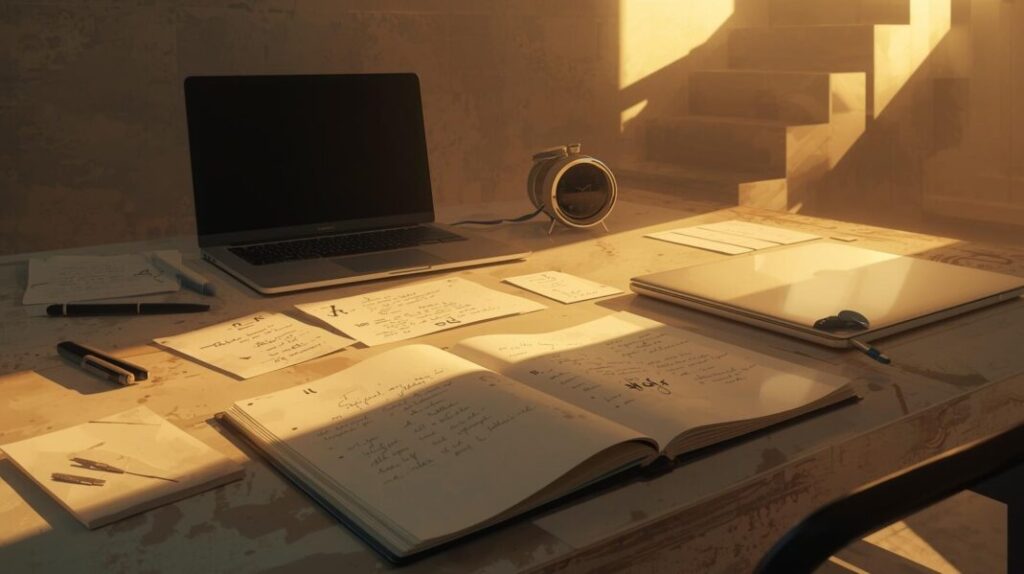
It happened during a late-night review session, the kind where the room is dim enough to blend your fatigue with the glow of the screen. I had fed an AI tool a brief for a campaign tagline—something that needed a pulse, a little grit, a little lived-in intuition. What came back was a polished but hollow sequence of words, the kind that could sit comfortably in any industry, for any brand, under any sky. It was safe, sterile, and deeply forgettable. I felt a pinch of irritation, then something quieter—a tug, as if my own voice had been muffled. That was the night I decided my upcoming project would be completely AI-Free. Not as an act of defiance, but as a way to find myself again.
The Friction of Thought
Going AI-Free reintroduced me to the rugged terrain of actual thinking. I’d forgotten how strange and slow creative work can be when nothing is pre-chewed. The hunt for a true sentence, the false starts, the wandering afternoons—it all came back with a kind of prickly honesty. Human thinking doesn’t rise in clean vertical leaps; it climbs like a staircase in an old building where some steps creak and some hold memories. And the real discoveries happen on the landings, in those unexpected pauses where your mind stops rushing long enough for an idea to stroll in quietly. This friction, once something I tried to escape, became the compost that fed deeper, more deliberate innovation.
The Authority of Imperfection
As pages filled, imperfections bloomed everywhere—lopsided phrasing, stubborn metaphors, sentences that carried tiny fingerprints of my own biases and habits. But those flaws felt strangely comforting, almost like proof of life. Human work has its own grain, a texture that can’t be machine-sanded into smoothness. Readers instinctively trust writing that reveals a person behind it, someone who hesitated, stumbled, and reached. AI content, however clean, often hovers like a cloud of averaged-out correctness—competent but bodiless. Imperfection, I realized, is not a weakness in human creation. It’s a signature. It tells the audience: I was here. I cared enough to make this by hand.
Reclaiming My Own Voice
Choosing an AI-Free approach became an act of professional hygiene—an intentional clearing of mental clutter. Without a machine drafting my first 60 percent, I had to stretch my own cognitive muscles again. The silences were longer, the work was slower, and at times the page felt unfriendly. But in that discomfort, something vital returned. My voice—unruly, opinionated, and shaped by years of bruised deadlines—began to resurface. It carried its old rhythms, the ones I hadn’t heard in months. I realized that relying too much on AI had slowly siphoned off the rawness of beginnings, the part of the craft that teaches you what you sound like when no one is smoothing the corners.
A Quiet Conclusion
I’m not discarding AI altogether. It’s a tool—sometimes excellent, sometimes clumsy—but a tool nonetheless. The danger comes when convenience turns into dependency, when the machine becomes a soft crutch and our creative instincts start to drift into dormancy. That first AI-Free project wasn’t perfect, nor was it meant to be. It simply felt true. And when I finished, I felt a quiet, unmistakable satisfaction: a return to the grounding knowledge that this piece, with all its uneven edges, was entirely mine—built from my own mind, word by word, landing by landing.