


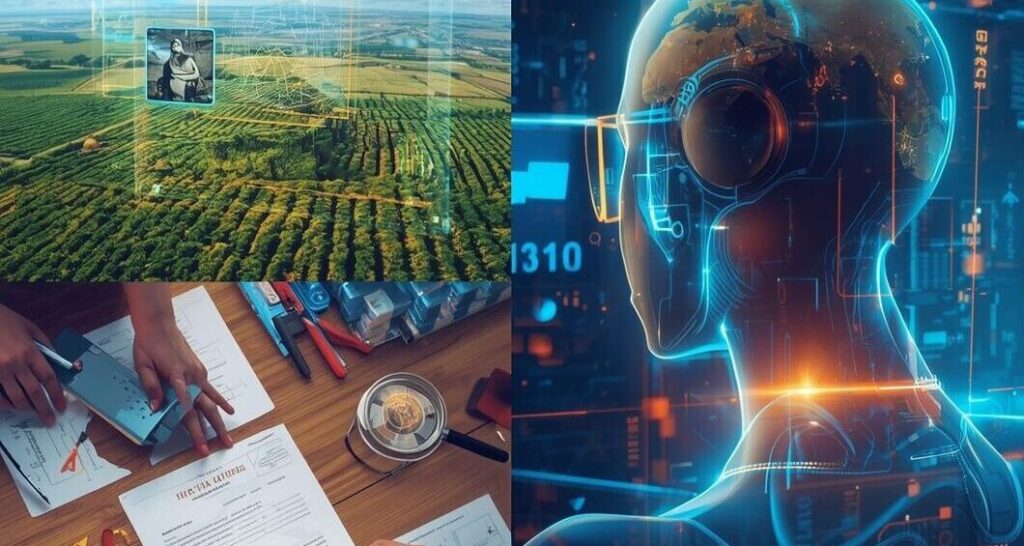
When most people imagine artificial intelligence, they picture futuristic labs, robot prototypes, or sci-fi movie scenes. But the truth is far more exciting: the most transformative AI isn’t hiding in research papers—it’s already out in the wild, quietly reshaping industries we interact with every day. From farms to forests, courtrooms to factory floors, AI is powering solutions that were almost unimaginable a decade ago. Here are five surprising, real-world applications showing how deeply AI has woven itself into modern life.
1. Smarter Agriculture: AI Predicts Crop Yields & Detects Pests from Space
Yes—AI is helping farmers long before a seed even touches the soil. In modern agriculture, satellite imagery combined with computer vision models can analyze vast fields and detect early signs of stress, like pest infestation, water shortage, or nutrient deficiency.
These systems compare millions of pixels over time to identify patterns invisible to the human eye. The result? Farmers can act early, reduce waste, and improve their yield predictions with impressive accuracy. This means fewer crop losses and better food security in regions that need it most.
2. Wildlife Conservation: AI Identifies Animals from Camera Trap Photos
Conservationists have long relied on camera traps to track wildlife populations—but reviewing hundreds of thousands of photos manually is painfully slow. Enter AI-powered pattern recognition.
These models can distinguish between species, identify individual animals through unique markings, and even flag rare sightings in real time. This dramatically speeds up ecological studies and helps scientists track endangered species more efficiently. When AI handles the tedious sorting, researchers can focus on the more complex work of protecting Earth’s biodiversity.
3. AI in Creative Arts: Composing Music, Designing Album Covers & More
Creativity and machines might seem like opposites, but today’s generative AI is proving otherwise. Musicians now use AI tools that analyze musical structures and rhythms to help compose original melodies, harmonies, or even entire soundtracks. Visual artists and designers use AI to generate stunning album art, concept sketches, or mood boards in seconds.
These tools don’t replace human creativity—they amplify it. Artists can rapidly experiment with new styles, explore ideas they wouldn’t have imagined, and blend human intuition with machine-generated inspiration. The intersection of art and algorithms is becoming one of AI’s most unexpectedly vibrant spaces.
4. Legal Tech Revolution: AI Sorts Thousands of Documents in Minutes
The legal world, known for heavy paperwork and endless reading, is quietly being transformed by natural language processing (NLP). During the “discovery” phase of a case, lawyers must sift through mountains of contracts, emails, memos, and reports.
AI-driven document review tools can scan thousands of files, identify key phrases, detect inconsistencies, and highlight relevant sections far faster than any human team. This not only speeds up legal workflows but also reduces the chances of human error. For firms handling complex litigation, AI has become an indispensable research partner.
5. Manufacturing 2.0: AI Performs Quality Checks Better Than Humans
On today’s assembly lines, computer vision systems equipped with high-speed cameras examine products for flaws—cracks, misalignments, texture issues—at a level of detail and consistency that surpasses human eyesight.
These AI systems can operate nonstop, learn from past defects, and adapt to new product designs. The immediate impact is improved product quality, reduced wastage, and a smoother, more reliable manufacturing process. As factories adopt AI-based inspection, the traditional concept of “quality control” is being completely redefined.